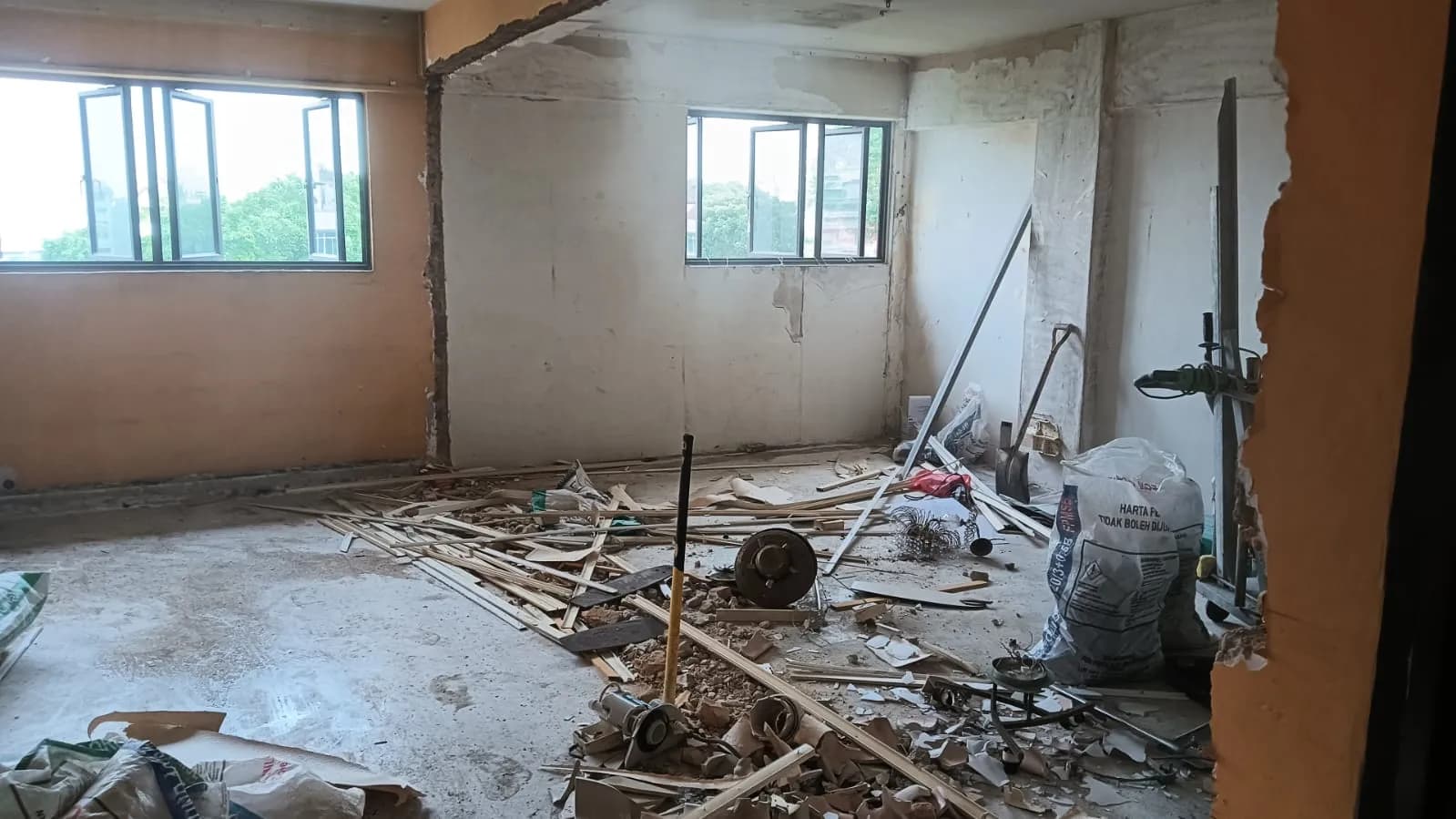
Hacking Is the Most Regulated Part of Renovation
Hacking and demolition carry more regulatory weight than any other renovation trade because they affect structural integrity and the safety of adjoining units. HDB applies the same structural safety standards and approval process for renovation works across all HDB flats, regardless of age. Contractors must obtain HDB's approval before commencing any renovation works that may affect the structure of the flat.[reference:80]
Getting this wrong does not just risk a fine — it risks a stop-work order, structural damage and liability for neighbouring units.
When You Need an HDB Renovation Permit
A renovation permit is required for works that involve hacking, laying or removing wall or floor tiles, demolishing or constructing walls, and altering floor levels. Lodgement works and A&A items involving hacking can only commence after approval from HDB has been obtained.[reference:81]
For a BTO, the permit is typically submitted within one to two weeks of key collection and approved one to three weeks after submission, though turnaround can be around three working days for straightforward scopes within HDB guidelines.[reference:82][reference:83]
Renovation should be completed within three months of permit approval for new flats and one month for existing flats, to minimise inconvenience to neighbours.[reference:84]
The 3-Year BTO Hacking Rule
HDB restricts hacking of any internal walls in a new BTO flat for the first three years from key collection, and restricts certain floor-finish works — such as full overlay or hacking of the original screed — within the same window. Violating this rule is the single most common reason BTO owners get a stop-work order.[reference:85]
This does not mean no renovation for three years. It means no internal wall hacking. Tiling, carpentry, painting and non-structural works proceed as normal.
Structural vs Non-Structural Walls
Structural walls — reinforced concrete walls, columns, beams and slabs — cannot be hacked, drilled through or removed. These elements maintain the building's structural integrity. Hacking, alteration, removal of, or drilling holes through reinforced concrete walls is prohibited.[reference:86]
Non-structural partition walls may be hackable, but only with HDB approval and only by a qualified contractor. HDB evaluates the proposed works and may impose site-specific conditions, such as limits on the extent a particular wall can be removed.[reference:87]
Who Is Allowed to Hack HDB Walls
Renovation works that affect structure can only be done by contractors listed in HDB's Directory of Renovation Contractors (DRC). DRC contractors must only deploy workers trained by the BCA Academy to carry out demolition or hacking of walls in HDB flats.[reference:88][reference:89]
Engaging a non-DRC contractor for hacking is not a grey area — it is a compliance failure that can void insurance and expose the homeowner to liability.
What Hacking Costs in Singapore (2026)
| HDB Hacking Scope | Indicative Price |
|---|---|
| Toilet hacking | $900 |
| Kitchen hacking | $1,500 |
| Kitchen + 2 toilets | $2,200 |
| 3-room flat hacking | $2,800 |
| 4-room flat hacking | $3,200 |
| 5-room flat hacking | $3,800 |
| Executive apartment | $4,200 |
| Executive maisonette | $4,600 |
Prices depend on scope, flat size and whether debris disposal is included. Reputable packages include clearing and disposal of renovation debris at approved dumping grounds.
What to Check Before Hacking Begins
- Is the HDB renovation permit approved and displayed?
- Is the contractor listed in the HDB Directory of Renovation Contractors?
- Have structural walls been identified and excluded from the scope?
- Are electrical and plumbing lines safely terminated before demolition?
- Is debris disposal at approved grounds included in the quote?
- Are approved renovation hours being followed? Noisy works are limited to weekdays, and no work on Sundays and public holidays.[reference:90][reference:91]
ASIL WORKS handles HDB hacking with permit coordination, DRC-compliant crews, safe termination of services and approved debris disposal — so the first phase of your renovation does not become the most expensive mistake.